
A cookery book which belonged to Jean Campbell of Clunes reveals the diet of an 18th century Scots laird’s family.
Recipes for food, medical preparations and cosmetics were passed around among friends and family, and copied into books. The first cookery book printed in Scotland, Mrs McLintock’s Receipts for Cookery and Pastry-Work, appeared ten years later in 1736.
This volume contains recipes for cooking many types of puddings, pies, fish, soups and meat dishes. The recipes shown here are for stewing eels and oysters and for a sauce for fish.
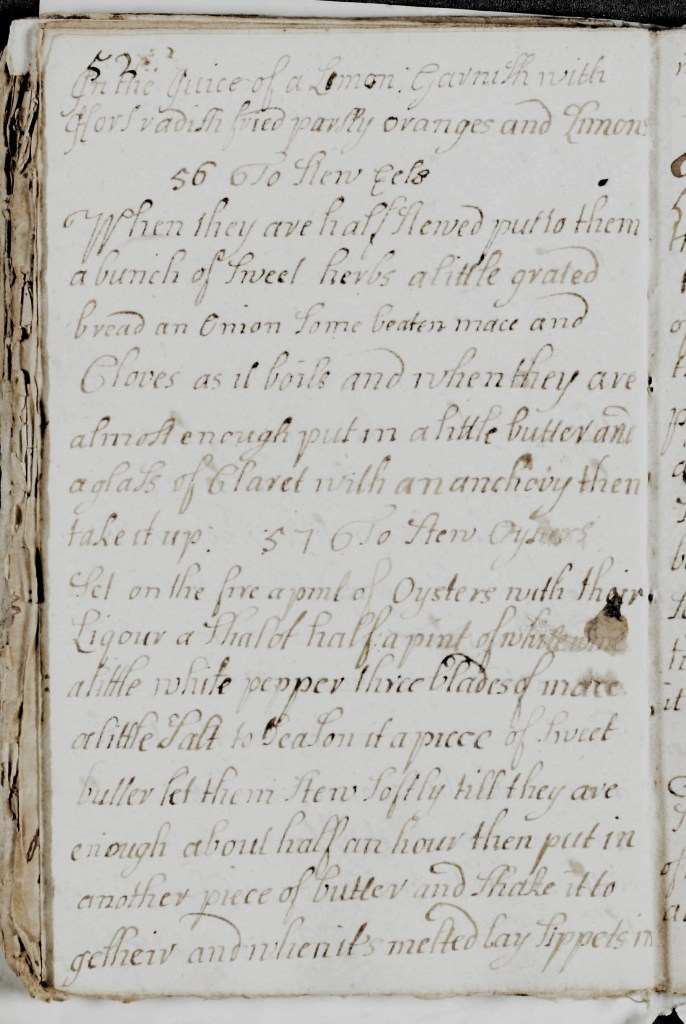
To Stew Eels
When they are half stewed put to them a bunch of sweet herbs a little grated bread an onion some beaten mace and Cloves as it boils and when they are almost enough put in a little butter and a glass of Claret with an anchovy then take it up.
To Stew Oysters
Set on the fire a pint of Oysters with their Liquor, a shallot half a pint of white wine a little white pepper three blades of mace a little Salt to season it a piece of sweet butter let them stew softly till they are enough about half an hour then put in another piece of butter and shake together and when its melted lay lippets in the dish. Serve them for a side dish.
There are several other recipes and recipe books in our collections. This Scottish family’s recipe for chicken curry comes from a collection of personal papers from 1761-1817.
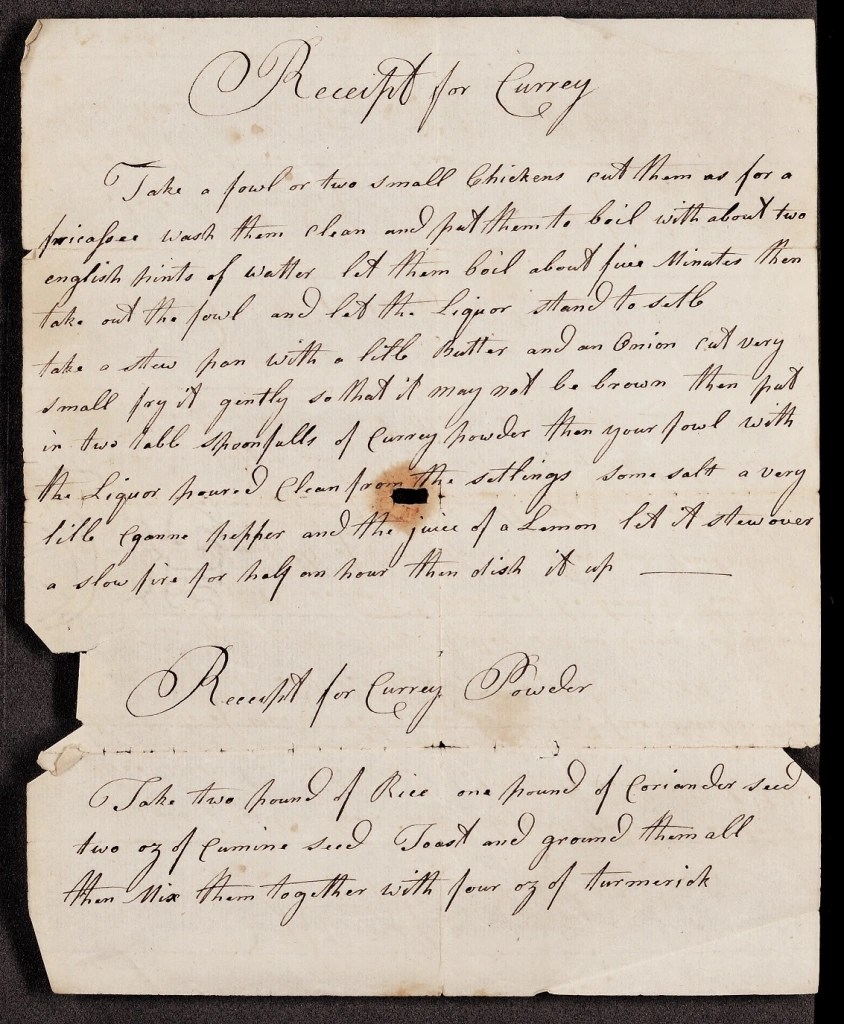
If you’d like to try the recipe yourself, it requires:
One fowl or two small chicken
Two pints of water
Knob of butter
Chopped onion
Two tablespoons of curry powder
½ teaspoon Cayenne pepper
One lemon
Take a fowl or two small chickens put them as for a fricassee wash them clean and put them to boil with about two English pints of water let them boil about five minutes then take out the fowl and let the liquor stand to settle take a stew pan with a little Butter and an Onion cut very small fry it gently so that it may not be brown then put in two table spoonfuls of Currey powder then your fowl with the liquor poured clean from the settlings some salt a very little cayenne pepper and the juice of a Lemon let it stew over a slow fire for half an hour then dish it up.
This is the final post in a series looking at some of the most striking and interesting items in the collections of National Records of Scotland. The others on Open Book are about a 17th Century Gaelic eulogy, a plan of the Forth Bridge, a map of the Battle of Culloden and an inventory of jewellery belonging to Mary, Queen of Scots.
The text of this post is taken from Treasures of National Records of Scotland, 2025. This book is available to purchase at the Scotland’s People online shop.

