
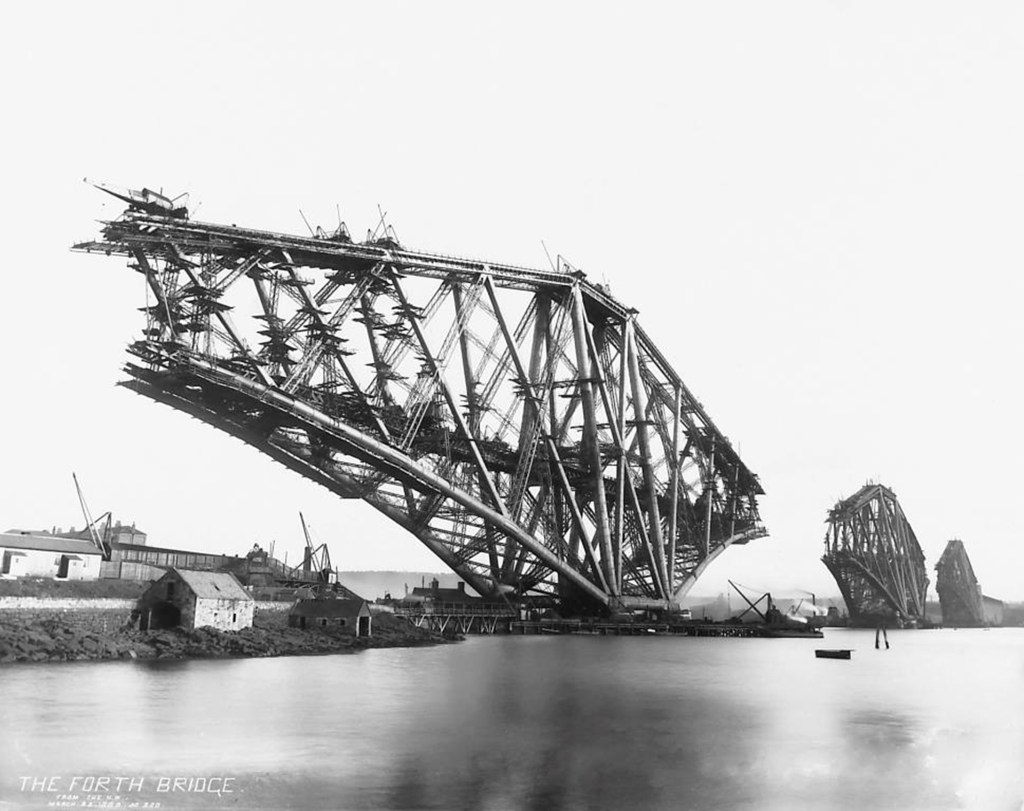
The Forth Bridge is one of the greatest monuments to Victorian railway engineering.
The Tay and Forth Bridges were vital to the expansion of the Scottish railway system. For the companies running trains north of the east line, the bridging of the Forth and Tay estuaries was essential for shortening journey times from Edinburgh to Aberdeen. Until the opening of the Forth Bridge, railway passengers had to cross the river at Queensferry on “train ferries”.
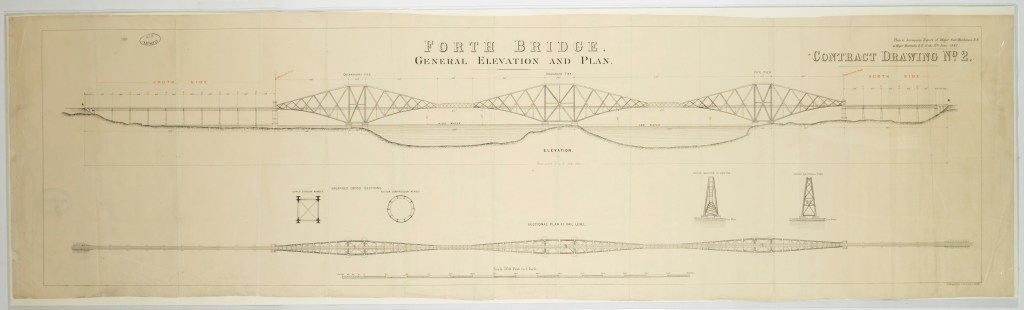
Sir Thomas Bouch was also engineer for the Forth Bridge, but his design for a suspension bridge was abandoned after the Tay Bridge collapsed. Sir John Fowler and Benjamin Baker produced a new cantilever design, which was built by Sir William Arrol & Co., a Scottish civil engineering and construction business founded by William Arrol and based in Glasgow. The bridge took six years to complete and claimed the lives of 57 workmen. It required 55,000 tons of steel and eight million rivets.
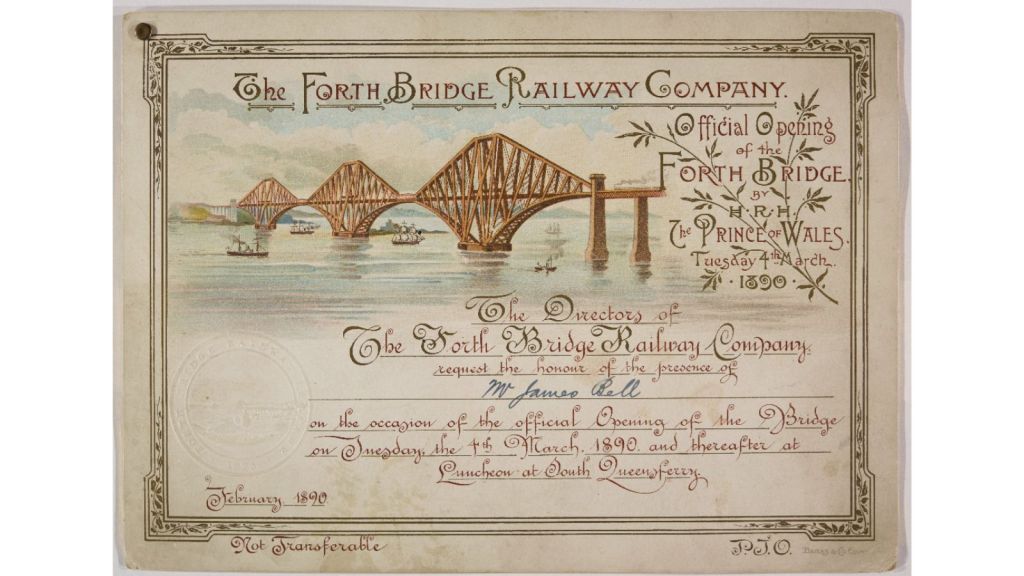
This post is the second in a series looking at some of the most striking and interesting items in the collections of National Records of Scotland. The first, on a 17th Century Gaelic eulogy, is available on Open Book.
The text of this post is taken from Treasures of National Records of Scotland, 2025. This book is available to purchase at the Scotland’s People online shop.


One thought on “Treasures of National Records of Scotland: Plan of the Forth Bridge, 1883”