
Throughout history, the lives of people across the word have been dramatically enhanced through the construction of infrastructure. Originally written for and published on the Japan Society of Civil Engineers website, this article explores Robert Stevenson and his family, and their contribution to the construction of lighthouses across the world, and in Japan.
The exhibition For The Safety Of All: Scotland’s Lighthouses is free to visit at General Register House, Edinburgh, until 4 pm on Saturday 26 September. Join us on Saturday for Doors Open Days 2026.
Bell Rock Lighthouse, built in a difficult spot
The Stevenson family’s achievements in lighthouse construction began with Robert Stevenson. Born in 1772 in Glasgow, Scotland, in 1791 at the age 14 he became an apprentice to Thomas Smith, the first chief engineer of the Commissioners for Northern Lighthouses. Smith, would later become his stepfather and father-in-law.
The Bell Rock Lighthouse, constructed on a treacherous reef situated 11 miles off the Angus coast is considered his greatest achievement. It is now the world’s oldest working sea-washed lighthouse. Consisting of 90 courses of stone, amounting to 36 metres, on the 30 July the last layer was set in place. The final stone was accompanied by Stevenson’s words:
‘May the Great Architect of the Universe, under whose blessing this perilous work has prospered, preserve it as a guide to the mariner’.
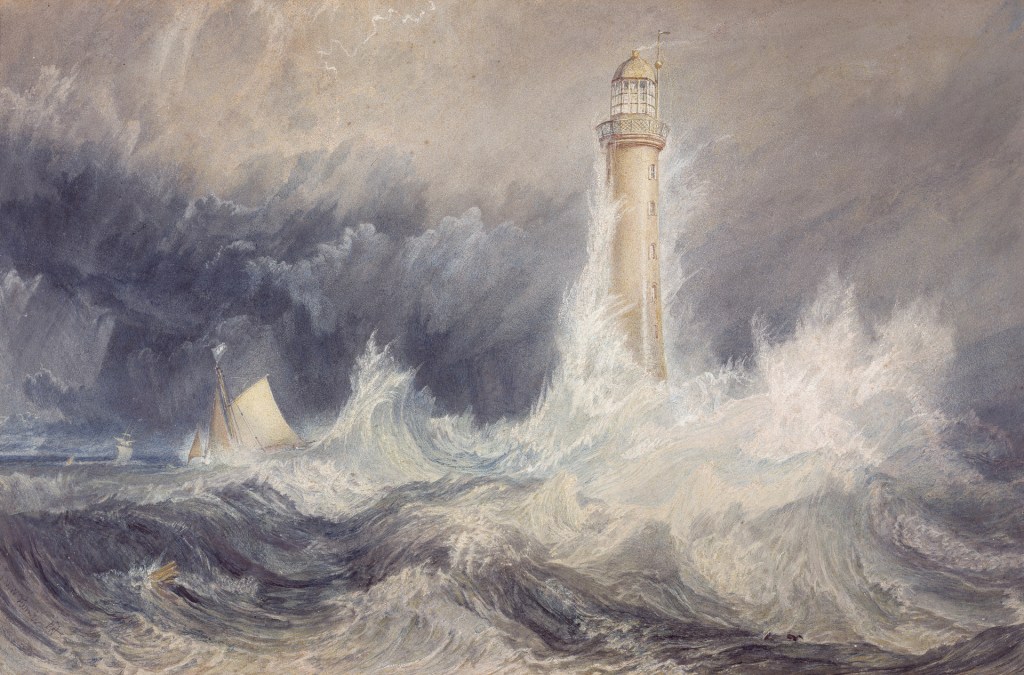
JWM Turner’s painting of Belllock Lighthouse reveals the harsh nature of the time and the grandeur of the lighthouse. From 1808, Stevenson served as chief engineer of the Northern Lighthouse Board for 34 years, and throughout his life, he designed not only lighthouses but also roads, bridges, and railway lines – a legacy of great achievements.
The Sons Who Supported the Development of British Civil Engineering Technology
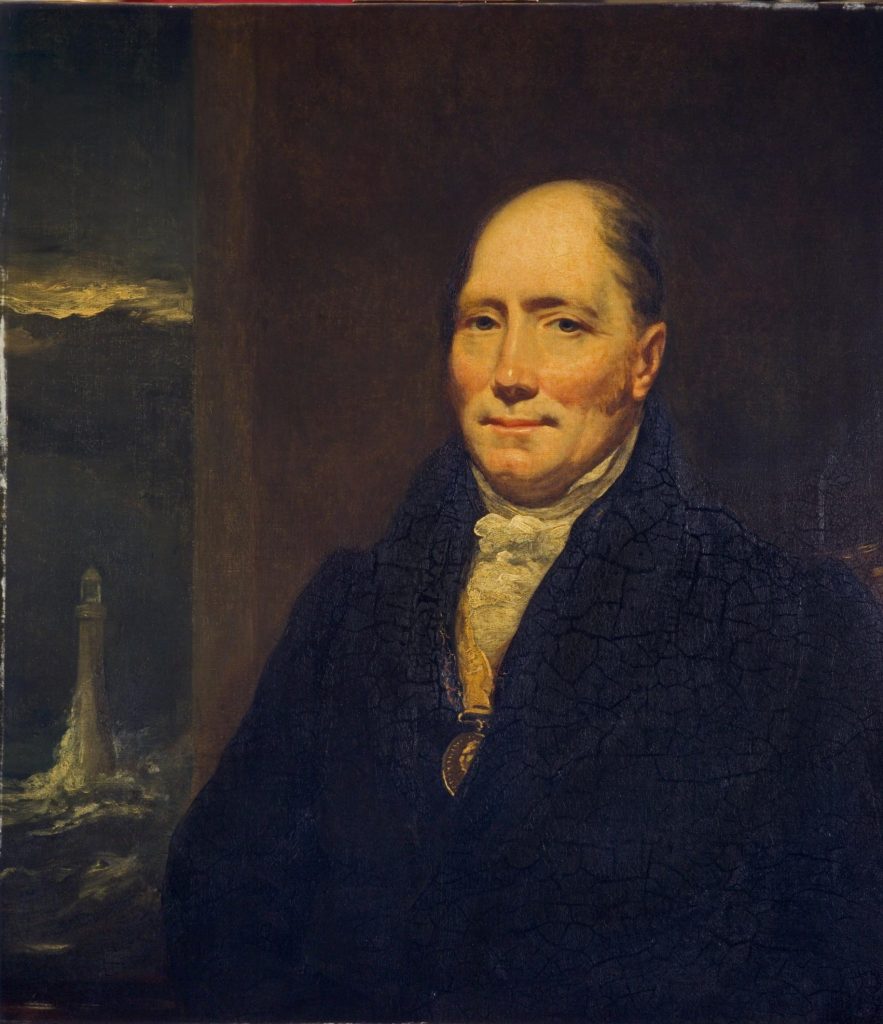
Robert’s sons – Alan, David, and Thomas – took over the family business. His eldest son, Alan, studied Latin and Greek literature and mathematics at the University of Edinburgh and was to become a clergy, but instead chose to pursue engineering. While working under his father in 1828 he published, ‘The British Phara’, a list and illustrations of lighthouses in Britain and Ireland that were beneficial to sailors at the time. From 1843 to 1853, when he succeeded his father as chief engineer of the Northern Lighthouse Committee, he built 13 towers. The construction of the Skerryvore Lighthouse, located 12 miles from Tyre Island and begun in 1838, was extremely challenging and rigorously tested his patience and health. However, he succeeded and proved his abilities as an engineer when it was lit in 1844. Later, he improved the conventional thin Fresnel lenses for lighting to a cylindrical shape, completing a device that delivered light more strongly and evenly.
The second son, David, mastered craftsmanship after graduating from university and later matured as an engineer. Before joining the Commissioners for Northern Lighthouses in 1853, he was involved in the construction of the Thames Tunnel in Brunel and railway lines and bridges across Britain, North America, and Europe. Between 1854 and 1880, he built a total of 28 lighthouses, including 26 at the D and T Stevenson company he co-founded with his brother Thomas. He expanded his lighthouse business to India, New Zealand, and Japan. He dispatched Richard Branton to Japan, and devised seismic joints, but their practicality was limited.
Novelist Robert Louis Stevenson (1850-1887)
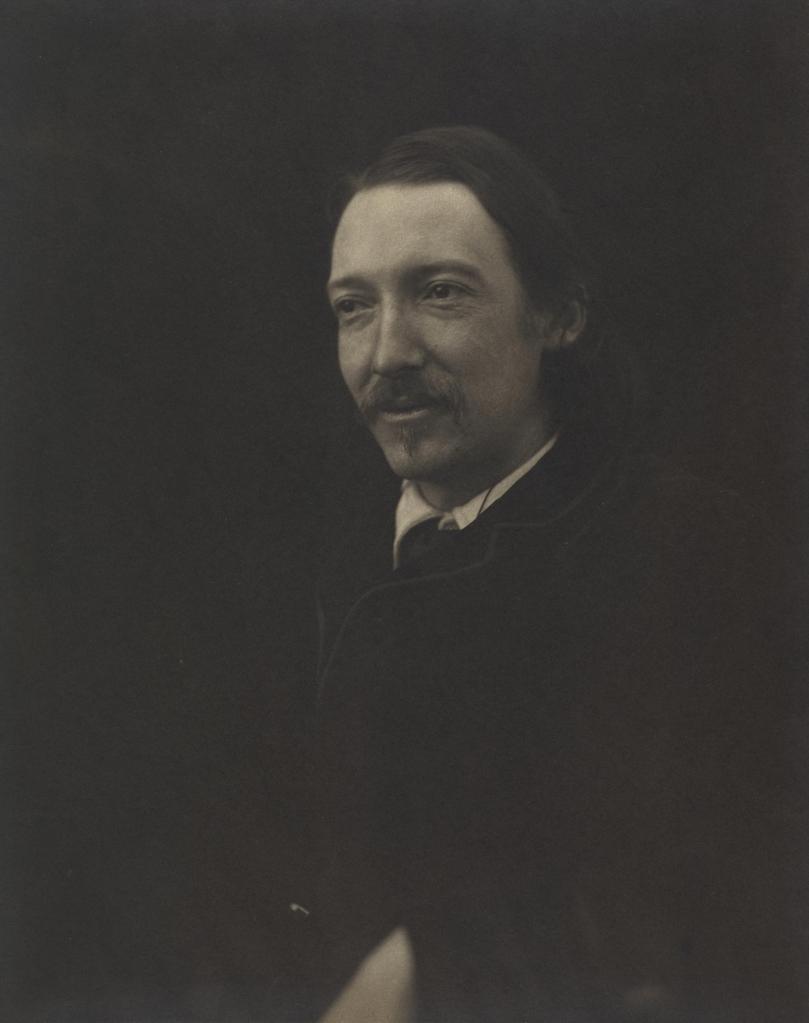
The youngest, Thomas, was passionate about English literature and had a strong creative drive from a young age, but was encouraged by his strict father to pursue the path of an engineer, and at 17 he became an apprentice. From 1839, he began contributing to civil engineering and industry, leaving behind more than 60 academic papers and articles. In 1846, he became a co-owner with his brother David, becoming one of the experts in lighthouse lighting and port engineering.
Thomas’ son, novelist Robert Louis Stevenson, did not inherit the family business but began writing at his father’s suggestion. In 1880, he wrote the following: “Every time I smell the sea, I realize I am not far from the works left by my ancestors.” The stories of the Stevenson family’s long-standing struggles with the sea greatly influenced him, nurturing his imagination and eventually creating masterpieces of adventure novels such as “Treasure Island.”
Saho Arakawa, Conservator
National Records of Scotland
References
- R. Paxton: John Rennie and the Bell Rock Light House, Northan Lighthouse Board Journal Winter 2021
- R. Paxton: Robert Stevenson, Alan Stevenson, David Stevenson, Thomas Stevenson, Oxford Dictionary of National Biography. 2004
- E. Mehew: Robert Louis Stevenson, Oxford Dictionary of National Biography 2004
- A.W. Skempton et al: Robert Stevenson ,Biographical Dictionary of Civil Engineers in Great Britain and Ireland – Volume 1: 1500-1830 ,by Thomas Telford Ltd for the Institution of Civil Engineers 2002, p 661-667
- Stevenson: Memoir of Robert Stevenson, Civil Engineer, ‘Biographical Sketch of the Late Robert Stevenson, Read at the Royal Society of Edinburgh, at the meeting of 17th February
Brief Chronology of Robert Stevenson (1772-1850)
- He was born in 1772 (An’ei 1) in Glasgow, Scotland.
- In early 1790 (the Kansei era), he studied natural philosophy and other subjects at the University of Glasgow.
- In 1797 (Kansei 9), he became an apprentice to his stepfather Thomas Smith, the chief lighthouse engineer of the Northern Lighthouse Board in Scotland, and became an engineer.
- In 1807 (Bunka 4), construction began on the Bell Rock lighthouse on the North Sea reef. After its completion, the lighthouse was highly regarded as a historic achievement in the history of offshore lighthouse construction.
- In 1808 (Bunka 5), he was appointed Chief Lighthouse Engineer of the Northern Scottish Lighthouse Committee.
- During his tenure, he led the construction and renovation of about 17 lighthouses across Scotland. He was also engaged in civil engineering projects for ports, bridges, and roads.
- In 1815 (Bunsei 7), he was elected a Fellow of the Royal Society (FRS) – FRSE, died in 1850 (Kaei 3).

