
As General Register House celebrates its 250th anniversary, now seems an opportune moment to shed light on those who helped to create the building and its interiors. Thomas Clayton Junior (1743-1793) was the plasterer responsible for decorating the famous central dome as well as numerous other walls within the building. Frequently confused with his father, Thomas Clayton Senior (circa 1710-1783), little is currently known about Clayton Junior’s life and career. However, piecing together the information found in a variety of historical documents (many of them held by the National Records of Scotland) can help reveal more.
Thomas Clayton Senior was probably born in Yorkshire in around 1710. In 1738, he married Elizabeth Wilson; documentation of this marriage in the parish records shows them both living near Easby, North Yorkshire. The couple likely relocated to Scotland shortly after their marriage, as in 1740 Clayton Senior was recorded working under William Adam at The Drum (a country house the outskirts of Edinburgh) and at the Palace of Holyroodhouse. By 1743, the Claytons had settled in the town of Hamilton, just south of Glasgow, where all four of their children’s births are recorded: Thomas Clayton Junior was born on 8 March 1743, followed by Archibald (25 December 1745), Francis (circa 1746) and John (7 April 1747).

Full page of old parish register

In the record of his birth and baptism, Thomas Clayton Junior’s full name is recorded as ‘Thomas Vassalis Clayton’. His unusual middle name is thought to pay tribute to Francesco Vassalli, an Italian plasterer who worked in England between about 1724 and 1763. This suggests that Thomas Clayton Senior was closely acquainted with Vassalli and likely trained under him.
The family’s residence in Hamilton was undoubtedly connected to Thomas Clayton Senior’s extensive work for the Dukes of Hamilton during the 1740s. Unfortunately, his work in Hamilton Palace was swept away when the building was demolished, but his magnificent plasterwork in the ducal hunting lodge of Chatelherault survives. Clayton Senior’s next significant commission was at Blair Castle, where he worked intermittently between 1747 and 1757, creating elaborate plasterwork decoration in each of the major rooms. Throughout this time, he continued to undertake other commissions including at St Andrews Church in Glasgow, Hopetoun House in South Queensferry and Marchmont House in the Borders.
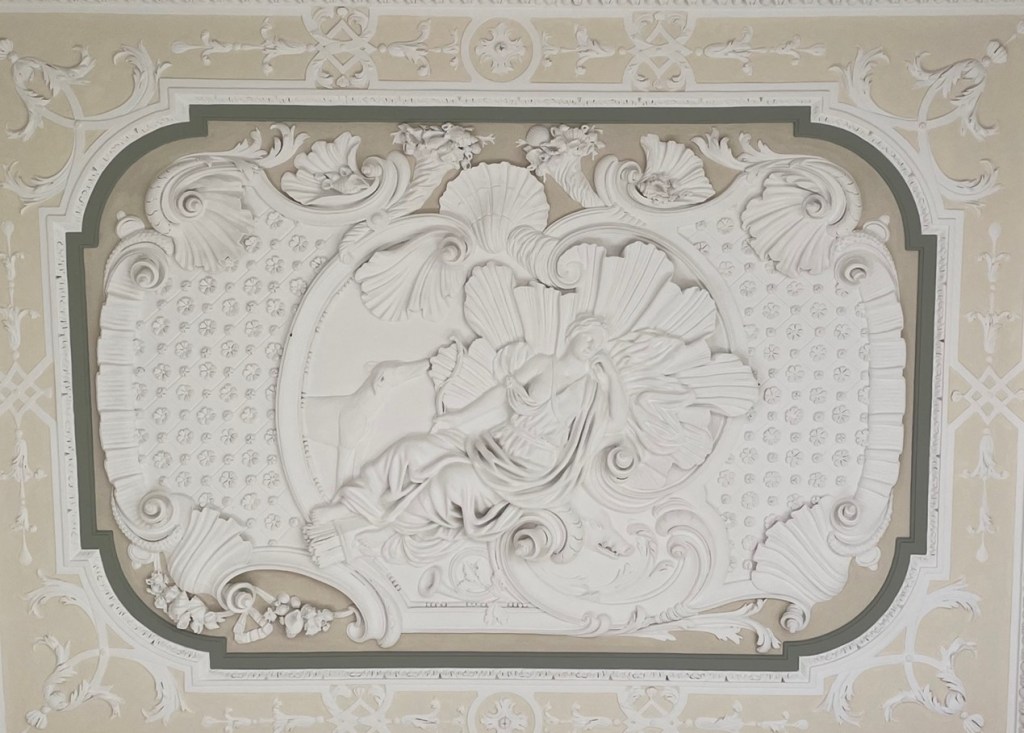
Surviving letters from Clayton Senior at Blair Castle show he operated a sizeable workshop, in which his son would have trained. In a letter dated 14 October 1753, he states: ‘I have all ready brought a good many hands from England, I would make it my business to bring more if required so that I may be able to push work forward’. Although this suggests that he operated a successful business, Clayton Senior claimed that the margins on his work were slight. When the Duke of Atholl, owner of Blair Castle, enquired about paying Clayton and his workers by a day rate rather than by measurement, Clayton responded: ‘it is a thing I cannot take in hand to do as I think it a hard case that one like me cannot have the small profits that arise from employing the men that [I am] obliged to instruct’.
Clayton Senior finished working at Blair Castle in mid-1757 and there is no further work that is securely attributable to him. In 1765, his wife Elizabeth Wilson died and the following year two Thomas Claytons are recorded as having married in Glasgow; in August, ‘Thomas Clayton plaster in Glasgow’ married Mary Lilly, the daughter of a local wright and in November ‘Thomas Clayton Stucco Maker in Glasgow’ married Mary Maxwell, the daughter of a local landowner. Subsequent events suggest that it was Thomas Clayton Junior who married Mary Lilly whilst his father, now a widower, married Mary Maxwell with whom he had one further child.

Marriage entry in the Old Parish Registers for Thomas Clayton (senior). Records the marriage of Thomas Clayton ‘plasterer’ to Mary Lilly. NRS, Crown copyright, OPR644 page 26 
Marriage entry in the Old Parish Registers for Thomas Clayton (senior). Records the marriage of Thomas Clayton ‘Stuco maker’ to Mary Maxwell. NRS, Crown copyright, OPR644 page 29
By 1783, Clayton Senior had died and been buried in College Churchyard in Glasgow.
Shortly after his marriage, Thomas Clayton Junior moved to Edinburgh where his career was henceforth based. His eldest daughter Elizabeth was born in Glasgow in 1767, but his two younger children, Isabella (born 1768) and Francis (born 1774), were both born in Edinburgh and baptised at the Canongate Kirk.
Despite having trained under his father, the style of Thomas Clayton Junior’s known work is quite different; where Clayton Senior’s work is mainly rococo in style, Clayton Junior’s work is neoclassical, reflecting the new fashions of the 1770s and 1780s. This can be seen in each of Clayton Junior’s three documented commissions: Dundas House (1772-4), Inveraray Castle (1781-2), and Register House (1785-89). That Clayton Junior completed work at Inveraray, on the west coast of Scotland, demonstrates that like his father he was required to travel across Scotland to complete commissions.

At Dundas House (St Andrew’s Square, Edinburgh), Clayton Junior worked with another plasterer, Stephen Coney, but at Register House he was solely responsible for ‘the whole plasterwork…in the said Repository or Register Office’. The contract for the work was signed on 12 March 1785 and required Clayton to ‘execute all the enrichments and ornaments of the size and agreeable to the drawings made out by Robert Adam Esquire’. Robert Adam was one of the foremost architects in Britain in the late-18th century and like Clayton had first learnt his trade under his father – the Scottish architect William Adam. The only element of the plaster decoration not carried out by Clayton were the medallions in the central dome, which the contract states were to be ‘purchased in London at the sight and to the satisfaction of Robert Adam’.

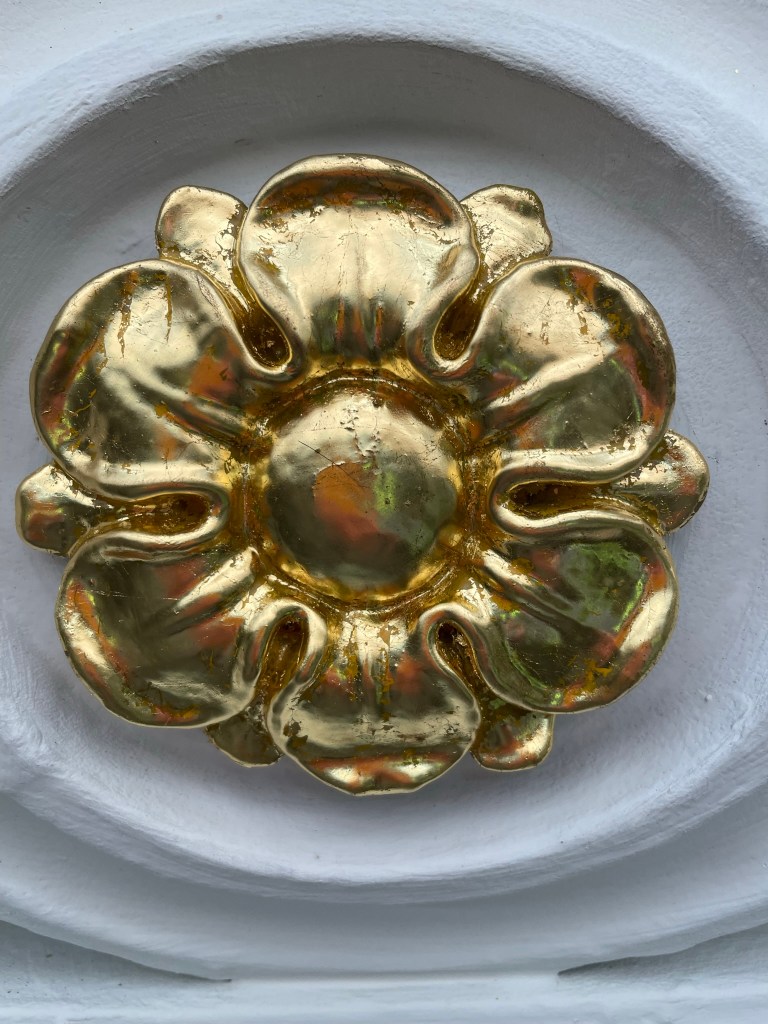
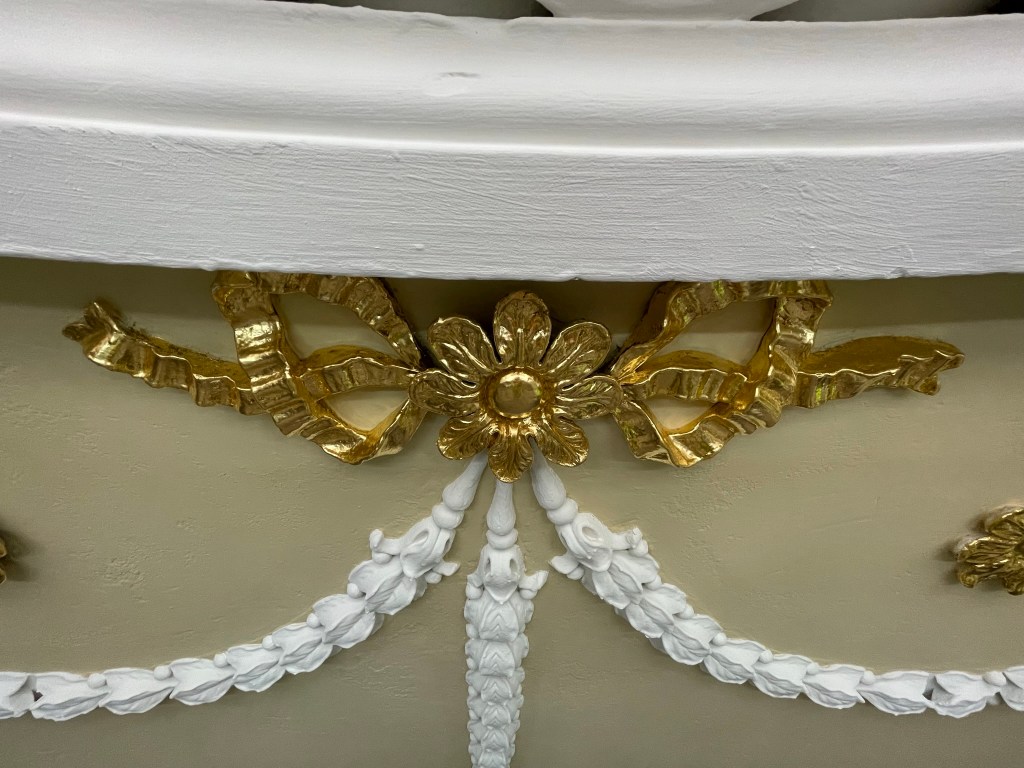
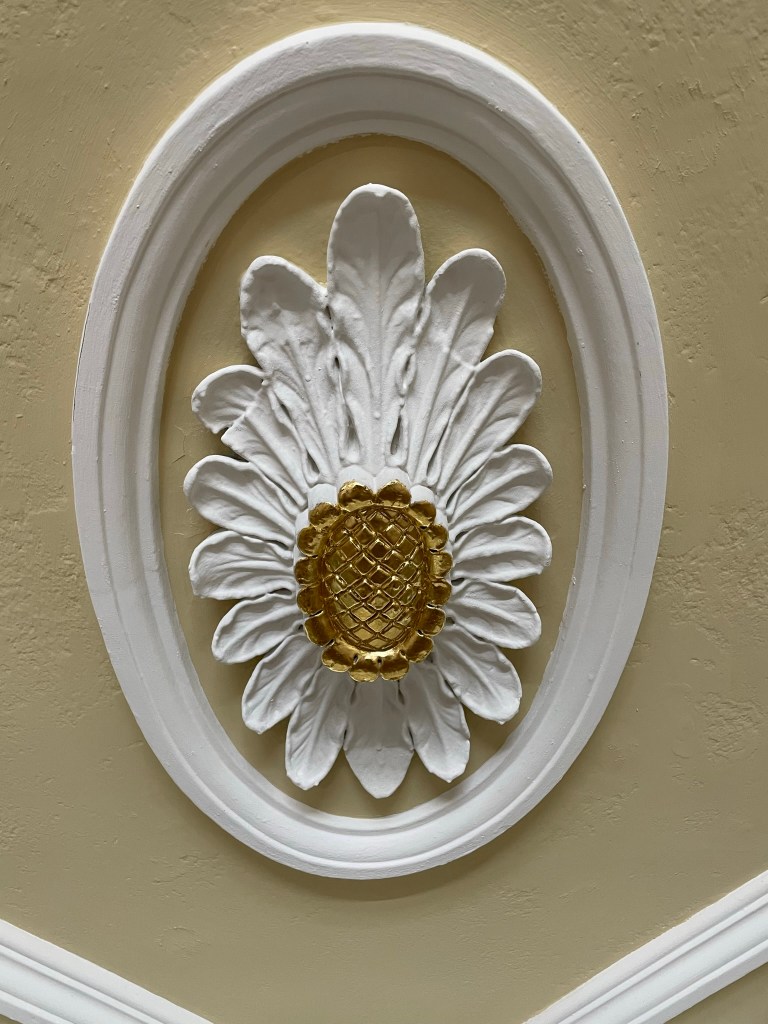

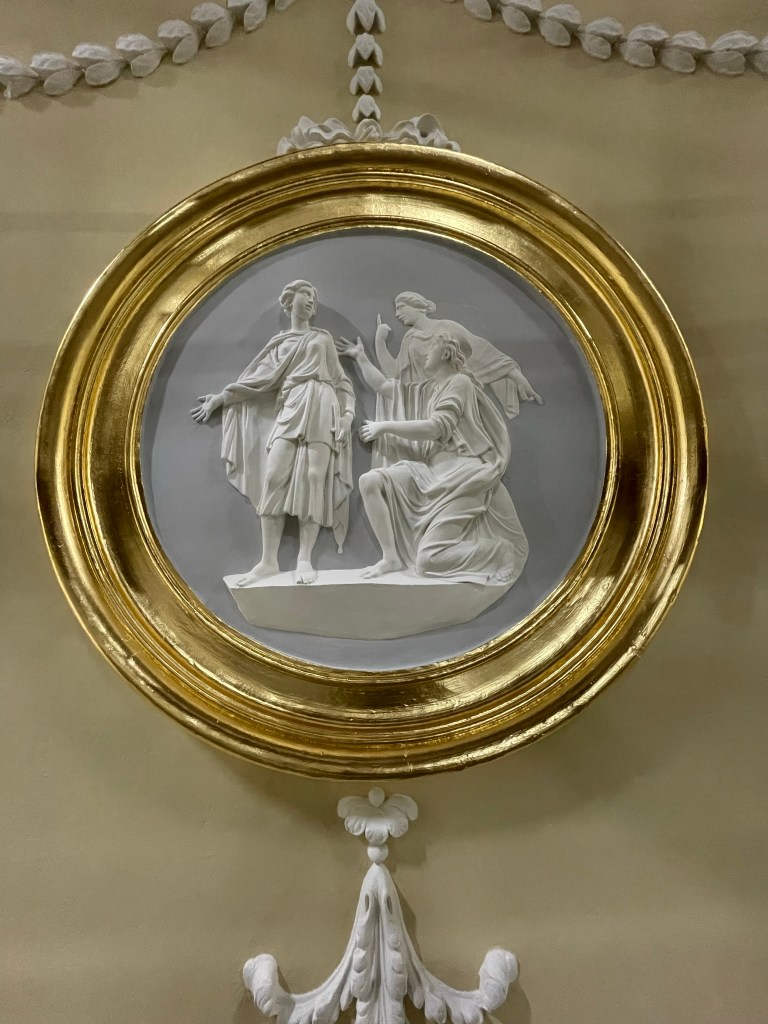
As with Clayton Senior’s commissions, the cost of the plasterwork at Register House was calculated by measurement, with the ornamented dome being by far the most expensive aspect at 4 shillings per yard. In total, the cost amounted to some £977 15s 5d. Most of this sum was paid to Clayton in small instalments as the work progressed, however, when it came to settling the final bill there were difficulties. By the terms of the contract, Clayton Junior was bound to supply all the materials for his work, including scaffolding. However, on his final bill he charged an additional £39 15s 5d, alleging that the clerk of works, Mr Salisbury, ‘who he had engaged to employ for erecting and supporting the scaffolds had overcharged him beyond all bounds and that unless the additional penny was paid he would have nothing by the job.’ Unfortunately for Clayton, the trustees responsible for the building’s construction refused to pay the extra sum and the situation remained unresolved at the time of Clayton’s death.

In 1757, Clayton Junior’s younger brother Francis had emigrated to America where he became a merchant in Wilmington, North Carolina. Following Francis’s death in 1791, his last will and testament was registered in the Edinburgh Commissary Court with his brother (‘Thomas Clayton plasterer in Edinburgh’) listed as his closest relative and sole executor. Clayton Junior subsequently travelled to North Carolina himself, presumably to settle his brother’s financial affairs. His death was recorded in The Scots Magazine of December 1793 as having occurred ‘at Poplar Grove, near Wilmington’. Poplar Grove was a sizeable plantation on the outskirts of Wilmington, which Francis may have owned.
Thomas Clayton Junior’s death in North Carolina at the age of 50 marks a sudden and unusual end to his career. Although he is currently known to have worked at just three buildings, he undoubtedly carried out countless other commissions, some of which will hopefully come to light in the future. For now, General Register House certainly remains his most significant commission and a testament to his skill.
By Emma Baillie
PhD Candidate at the University of Edinburgh
(With thanks to Atholl Estates, Jocelyn Grant, Anthony Lewis and Stephen Blench)
 Open Book