
This is part two of our profile of James Tytler, the first person in Britain to fly by hot air balloon. Part one is available here on Open Book.
Tytler was not alone in his enthusiasm for the possibilities offered by air balloons as a means of human conveyance and by the early 1780s fully-fledged ‘balloon-mania’ had reached Britain. Newspaper reports of the period described the efforts of French balloonists such as the Montgolfier brothers and their successful ‘flying globe’ or ‘areostatick sphere’ constructed of ‘taffety, [taffeta]’ (Hereford Journal, 18 September 1783). The Montgolfier’s first unmanned flight took place in the summer of 1783. However, balloon technology developed quickly and experiments in France took place with animals in the balloon’s basket at Versailles Palace with King Louis XVI and Marie Antoinnette watching on. In October 1783 Etienne Montgolfier would be the first human to undertake a tethered balloon flight. ‘Balloon-mania’ also inspired hairstyles and fashions including balloon hats, dresses and even trousers.
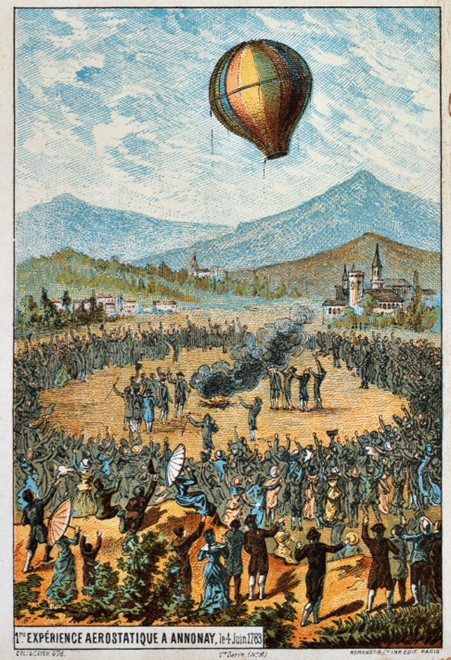
Image credit Wiki Commons. Public domain.
In 1784 Tytler had finally finished editing the second edition of the Britannica and turned his attention to the construction of his Grand Edinburgh Fire Balloon. Tytler raised a subscription in support of his efforts, which helped pay for its construction. On 21 June 1784, Tytler placed a front page advertisement in the Edinburgh Evening Courant which proclaimed the exhibition of a scale prototype ‘FIRE BALLOON, of 13 feet in Circumference, as A MODEL OF THE GRAND EDINBURGH FIRE BALLOON, which was to be seen ascending between the hours of 11 o’clock in the morning until 3 o’clock in the afternoon and then again between the house of 4 o’clock till seven in the evening.’ The venue for this exhibition was Comely Gardens, Edinburgh’s version of London’s Vauxhall Pleasure Gardens, where for an admittance fee visitors could experience exotic diversions and entertainment.
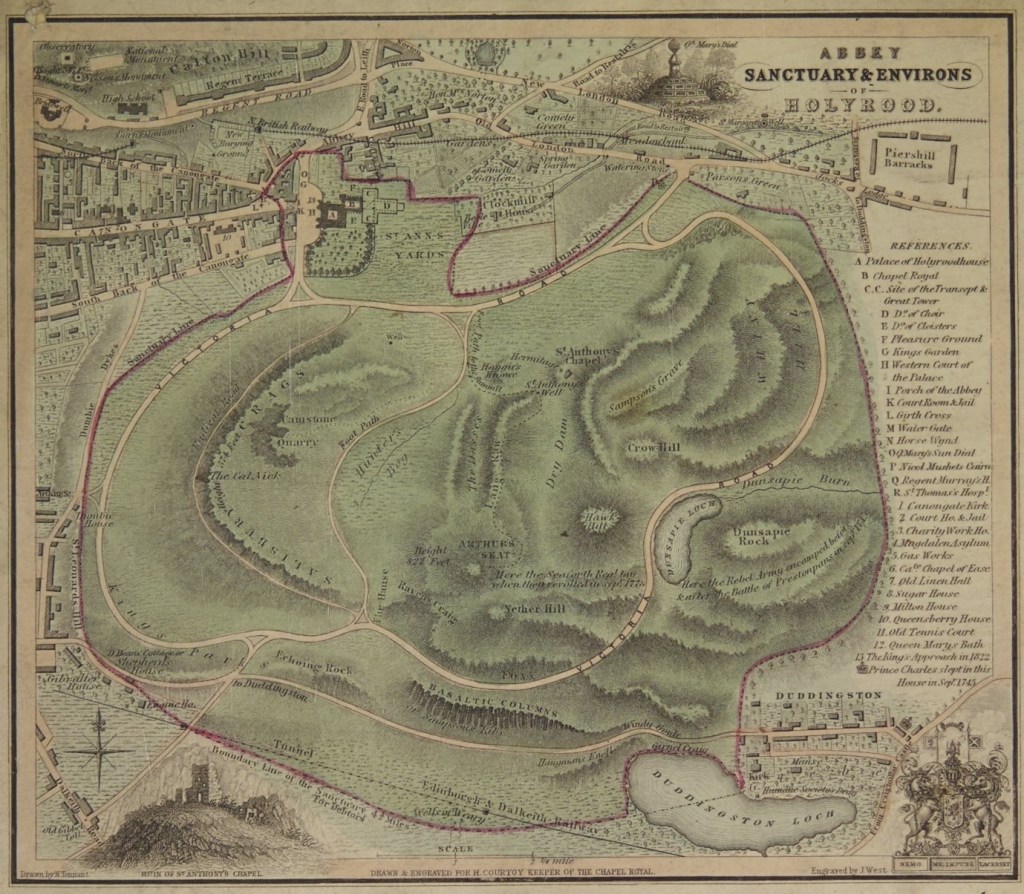
(NRS, Crown copyright, RHP6500/24/2)
In many ways this was an ideal place for the inflation of a hot air or ‘fire balloon.’ Comely Gardens was sheltered from the wind by a surrounding high wall lined with trees and the sixpence per admittance fee secured Tytler much needed funds. The balloon was tethered, or ‘confined by a string,’ which meant that those outside the gardens could probably see it as it rose above the trees, tantalising them with a glimpse of the cutting-edge technology being demonstrated. Although we do not know how many of Edinburgh’s citizens gathered to see Tytler’s model balloon, it was successful enough for him to proceed to build a full scale version a month later.

Image credit: Trustees of the British Museum. CC BY-NC-SA 4.0
Tytler’s balloon was barrel shaped, as depicted in the admittance ticket, shown above. The scale of the balloon compared to the size of the people being carried underneath is vastly oversized and the boat shaped basket was never realised. Unlike the ornate balloons flying over France, the Edinburgh Fire Balloon was strictly utilitarian. Measuring 10 metres wide by 12 metres high, the balloon was made of linen and wood, lashed via ropes to a basket similar in shape to a canoe. In this basket a stove was placed, fuelled by hay and wool.
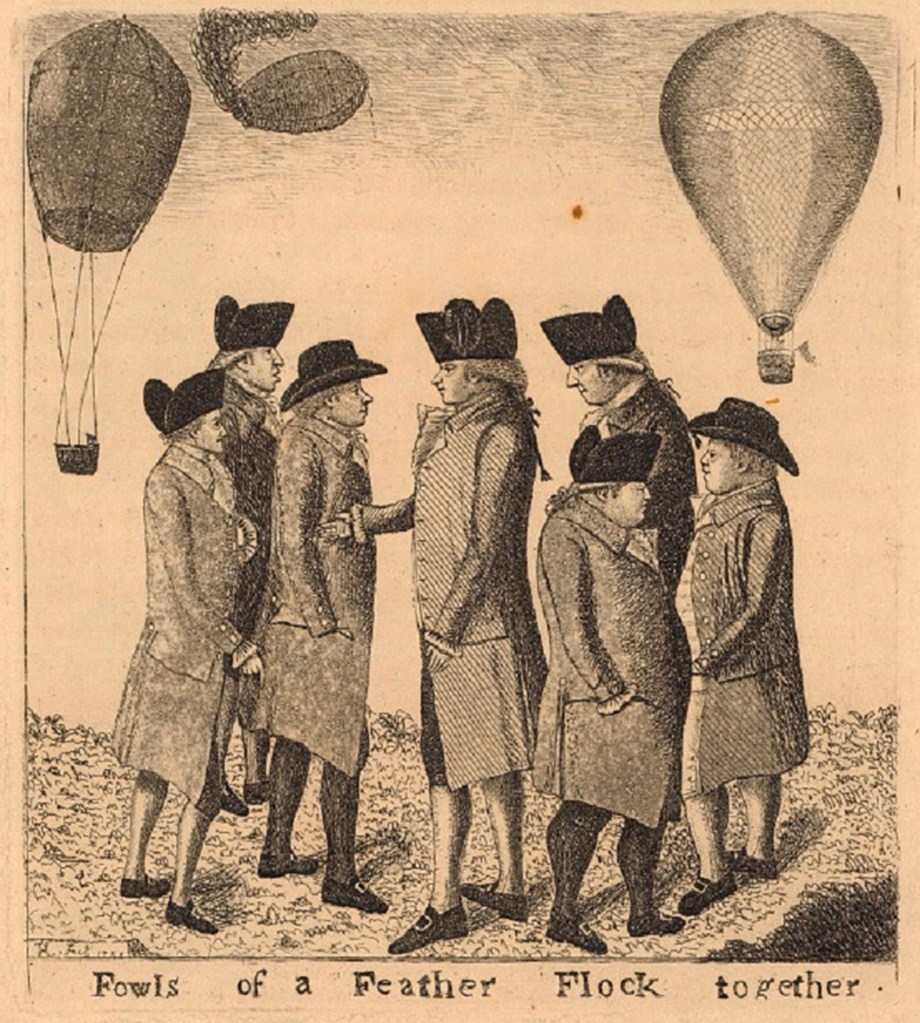
Image credit: Library of Congress. Public Domain
Although the venture was heavily subscribed, much of the money promised was not forthcoming, and not for the first – or last – time in Tytler’s life, he was in dire need of funds. Tytler realised that to attract more subscribers, his machine needed greater exposure. He decided to stage an inflation of the Grand Fire Balloon at the partially built Register Office at the east end of Princes Street. Designed by the renown Scottish architects Robert and James Adam, construction had started on the nation’s repository in 1774, but had ground to a halt after the project had run out of funds. In the central rotunda (15 metres wide) Tytler had found the perfect windproof and secure setting for trying out the larger scale balloon. He advertised the event in local newspapers, including the Caledonian Mercury:

Caledonian Mercury, British Newspaper Archive. Public domain
Tytler was optimistic for this trial, using it as a proving ground for a longer and more ambitious balloon ascent during Leith Races held in early August. The display at Leith races had the potential to impress huge crowds who had travelled to Edinburgh. However, the Register Office event did not go as planned; although the cylinder inflated, the linen cloth caught fire and ‘some small holes were burnt’ (Caledonian Mercury, Monday 19 July 1784), and the stove used to control the ascent had to be put out to limit the damage. Tytler, however, took courage from the incident saying that he learned some ‘important facts, formerly unknown’ about his machine.
After another unsuccessful attempt to raise his balloon again at Comely Gardens, causing Tytler to abandon the idea of a display at Leith Races, he finally achieved the breakthrough for which he was hoping. Early on Friday 27 August 1784 with a roaring stove, the Grand Edinburgh Fire Balloon piloted by Tytler himself, rose above the city’s skyline to a height of just over 100 metres and landed near Restalrig in the east of Edinburgh. Although the journey was short it was highly significant, claiming for Tytler the status of Britain’s first aeronaut.
Tytler probably contributed the pages on balloons or ‘Aerostations’ to the third edition of the Encyclopaedia Britannica (1788-1797) although he does not mention his own endeavours in the entry.
To be continued in part 3.
Jessica Evershed
Outreach and Learning Archivist
 Open Book
3 thoughts on “Part 2 – Tytler and the Grand Edinburgh Fire Balloon”