
Digital Imaging Specialist Clare Stubbs continues her exploration of the archives to learn more about Morison’s Haven, a once-thriving port at Prestonpans in East Lothian, now long deserted.
In 1877, plans were drawn up to not only expand the Prestongrange mining operations but to put down train tracks between the colliery and the harbour to expand exports from both the mines and the developing iron works on the site. In 1882, the Prestongrange Coal and Fire Brick Company was established as a mining and mineral trader, based out of Morison’s Haven, to take full advantage of the area.
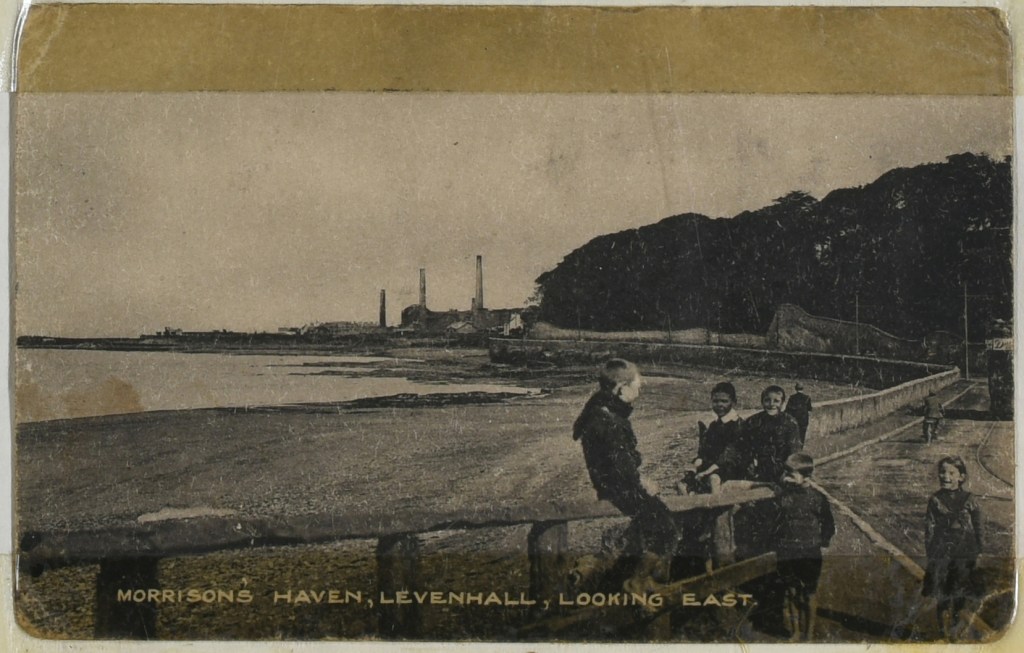
New technology was brought in to increase output in the earthwork factories and in the mines. Machines for making bricks and tiles were introduced and innovative water pumps were installed for draining the water from the mines.
With so much growth, workers’ lodgings were planned for the Cuthill area, which lay between Morison’s Haven and Prestonpans. Initially, there were plans for at least 50 cottages but the numbers were cut and the cottages became tightly-packed, two-storey residential blocks with small apartments in each.

Though it is hard to confirm how many people lived there at Morison’s Haven’s peak, we know that the annual rent for all of them totalled £70 in 1865 (NRS, VR99/7). By comparison, a nearby mansion house had the same annual rent, which suggests a substantial population.
By 1921, the census shows that there were still at least fifty 1-3 room residences in the accommodation blocks with over 300 residents (718/5 – pages 6-17). Even though business was slowing in the area, most of the men were still involved in mining or work from the harbour. This doesn’t include 100 transient seamen, machinery engineers, colliers and other labourers who listed the Prestongrange colliery or brick works as their address.
As the world continued to modernise, the industrial revolution continued to impact on the industry in the area. The harbour was improved and expanded by Robert Stevenson in the 1830s and by the 1890s, docking space for vessels of up to 14-feet draft and up to 300 tons was advertised. In 1889 alone 230 vessels docked at the harbour over the course of the year.
The Cracks in the Revolution
There were also downsides to the rapid modernisation happening throughout society. The repeal of the Salt Duty tax in 1823, the increased import of cheaper rock salt from the continent and alternatives to salting meat for preservation meant that the time-consuming process of salt-panning was no longer financially viable. This lead to the gradual decline and reduction of the number of salt pans functioning in Prestonpans.
International trade was increasing too, with steam ships and trains making transport of goods much quicker and more economical. Cheap imports flooded British marketplaces, which led to local industries like glass and ceramics workshops being priced out of the market and many businesses declaring bankruptcy.
To add insult to injury, the anticipated Great Seam of coal from the new Morison’s Haven coal pit was not producing the quality of coal that had been expected or budgeted for. Combined with the succession of sweeping reforms through the 19th century, the mining industry began to falter.
It began in 1842 with the double-strike of the Children’s Employment Commission (Mines) Report, which was rapidly followed by the Mines and Collieries Act, which banned the employment of children under ten and women – the cheapest sources of labour – from working in the pits.
As the century rolled on, additional pressure came from the Mine Regulations Act of 1872, the 1877 Miner Strikes across the country and the 1880 Employers’ Liability Act. The changes brought benefits to those working in the mines, but made them more expensive to run.
By 1882, the Prestongrange Coal and Iron Company went into voluntary liquidation “having become embarrassed” with rising debts and the holdings came under the control of the Prestongrange Coal and Fire-Brick Company Limited until the company went into liquidation and was dissolved in 1893. The final owner of the harbour and its adjoining assets was the Summerlee Iron Company, who managed the pit and mineral deposits until the 1940s and subsequent nationalisation.
End of an Era
Morison’s Haven continued to operate as a harbour into the early 20th century but the international trade dried up with larger and more central ports taking much of the trade. The final foreign ship left Morison’s Haven for Denmark in 1931.
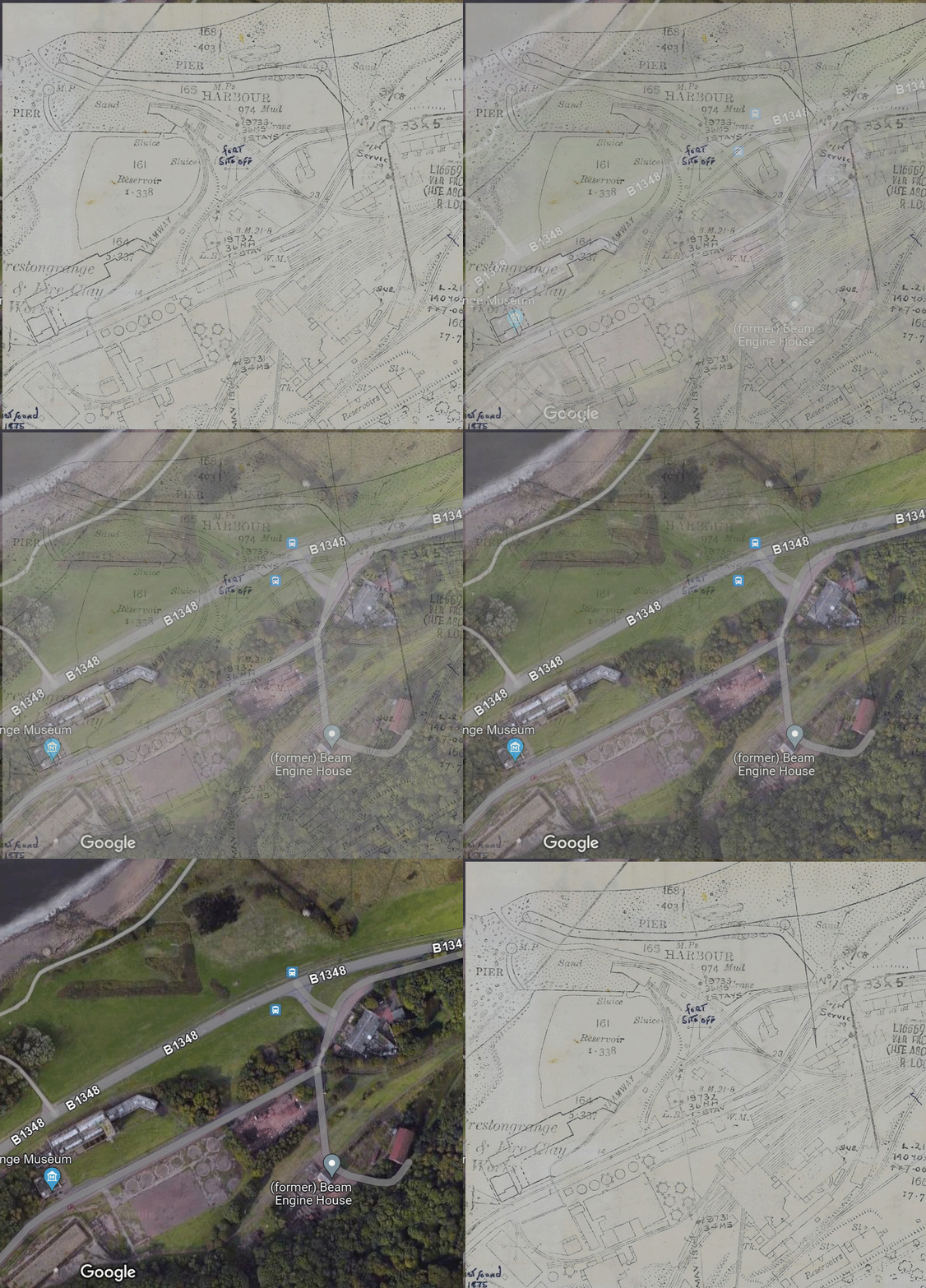
By 1936, the harbour was officially closed and partially filled in. While local people continued to use the harbour for boating regattas, it had fallen into a dangerous level of disrepair and was demolished. A new coastal road was built on the reclaimed land, the remains of the harbour buried and forgotten under several metres of slag from the colliery.

The colliery and brick works continued to function during the war but they were also struggling. Between 1923 and 1947, the number of people employed at the colliery at Prestongrange dropped from close to 1500 to less than 500. In 1959, the last functioning salt pan in Prestonpans – and Scotland – closed.
With the decline in industry and shipping, the residents who occupied the dilapidated labourers’ blocks began to relocate into the new residential areas in Prestonpans. By 1945, most of the blocks had either been demolished or repurposed for storage, with only a handful of residents remaining and by the time the harbour was demolished, they were all gone. Only a couple of the foremans’ cottages and the former customs house still survive.

Finally, in 1962, the British Coal Board had earmarked many Scottish mines for closure and the Prestongrange Colliery was closed with the redeployment of nearly 700 staff.

It was only through local efforts that the site was saved from complete destruction and was preserved as a museum that still stands as the testament to the industrial history of the area.
Clare Stubbs
Digital Imaging Specialist
 Open Book